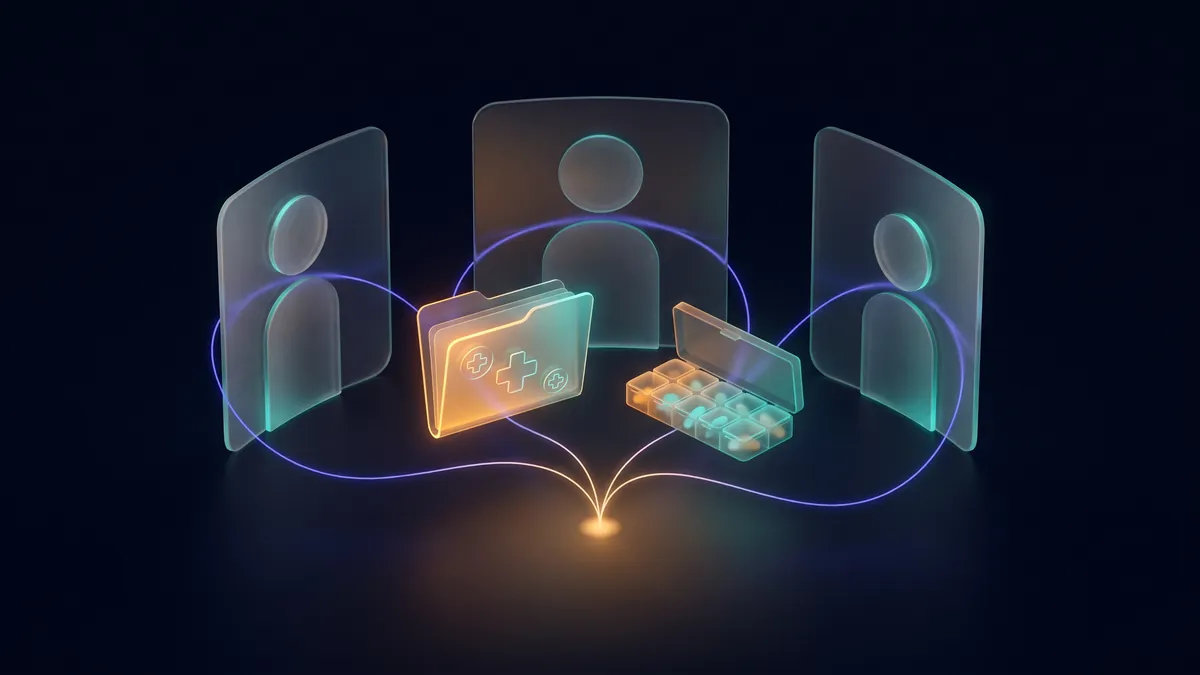
A personal memory layer is a single, secure place that stores the important details of your life and makes any of them findable in seconds — usually with the help of AI. Instead of scattering information across email, folders, notes apps, and your own head, you store something once and recall it forever.
That is the idea behind the name justonce.ai: capture it one time, never hunt for it again.
A memory layer is not a notes app
Notes apps are containers. You create a note, you name it, and later you have to remember where you put it and what you called it. The work of organising and retrieving falls entirely on you.
A memory layer flips that around:
- It organises for you. New information is automatically sorted — justonce.ai categorises everything across 19 life categories, from bills and insurance to health records and contacts.
- It understands meaning. You search the way you think. Ask "when does my car registration expire?" and it finds the answer even if those exact words appear nowhere in your stored data, because it uses semantic search rather than keyword matching.
- It connects the dots. Entities like people, dates, amounts, and locations are extracted automatically, and every fact keeps its dated history — when a detail changes, your records show what was true and when.
What can you store in a memory layer?
Practically anything you would otherwise have to look up twice:
- Bills, invoices, and receipts
- Insurance policies and warranties
- Medical records and prescriptions
- Legal and property documents
- Vehicle registrations and travel itineraries
- Contacts, account numbers, and credentials
You can add information by uploading a document, typing a note, forwarding an email, or connecting via API.
What about privacy?
A memory layer only works if you trust it with sensitive information, so security has to come first. justonce.ai encrypts every memory body at rest with AES-256-GCM before it is written, and uploaded documents the same way. Data is encrypted in transit, hosted in Australia, and never used to train models. Your data is yours: you can see, correct, and delete every memory it holds, and request a full copy of your data at any time.
Why it matters
The average person loses real time every week hunting for a document, an account number, or a detail they know they have somewhere. A personal memory layer gives those minutes back — and, when connected to an AI assistant as persistent memory, it means your assistant finally knows your context too.
Store it once. Find it forever. Explore the features or get started free.